

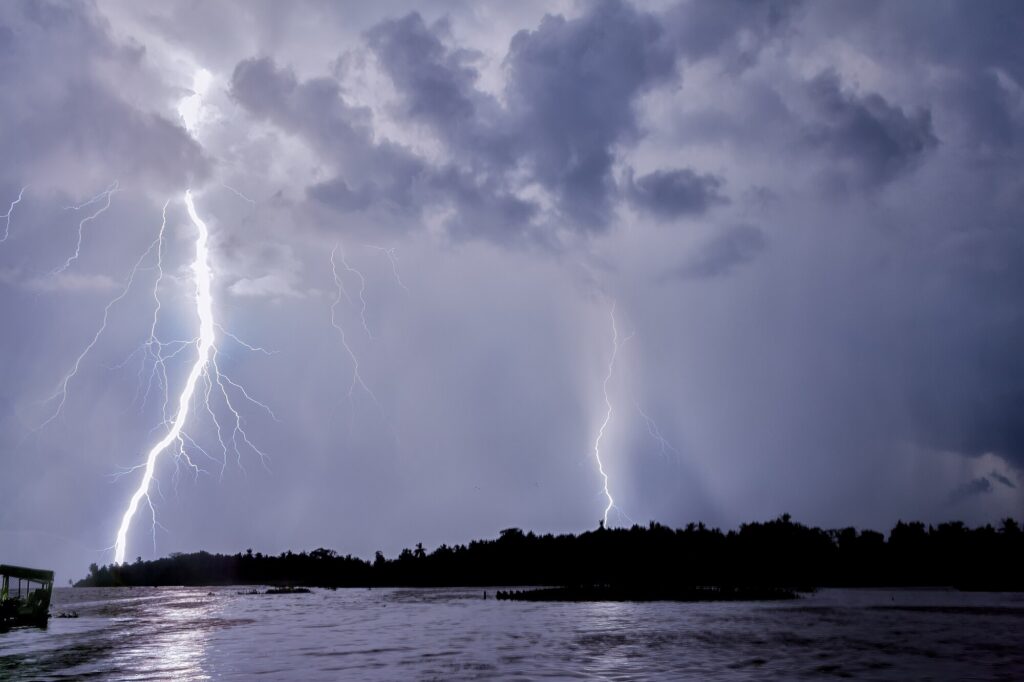
Where the Catatumbo river runs into Lake Maracaibo, in Zulia state, there is a storm that comes back almost every night. Not the same storm — a new one, in the same place, on the order of 140 to 160 nights a year, for up to ten hours at a time. It is the most electrically active place on Earth.
Locally it is the relámpago del Catatumbo. Sailors used it for centuries as a navigation mark and called it the Maracaibo Beacon, and it still sits on the flag and the coat of arms of Zulia.
Why it happens here
It is geography, not mystery. Warm, humid air comes off the lake — a large, shallow body of warm water open to the Caribbean — and runs into the mountains that surround the basin on three sides: the Andes to the south-east, the Perijá range to the west. The air has nowhere to go but up, it cools fast, and it does that in the same corner of the lake night after night.
The result is a storm cell that is effectively stationary, recharging every evening through the wet season.
What you actually see
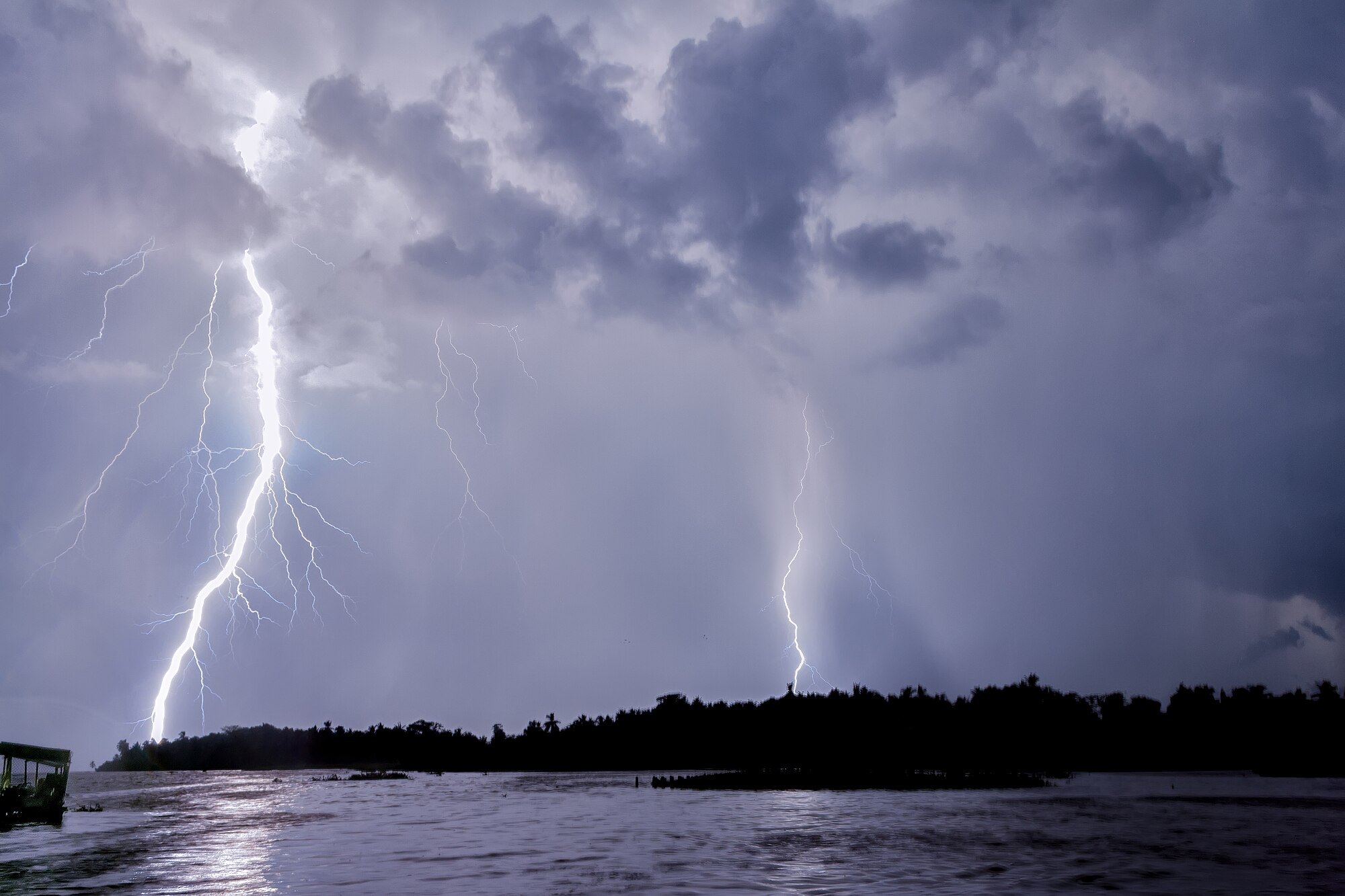
Not what most people picture. The lightning is largely cloud-to-cloud and very high, and you usually watch it from several kilometres away across open water. That produces two things:
- It is silent. The flashes are too far off for the thunder to carry. Sheets of light going off continuously with no sound at all is the part people remember.
- It is constant. Not a flash every few minutes — hundreds an hour on a good night, lighting the cloud from inside.
In 2014 the phenomenon was recognised as holding the highest lightning density measured anywhere on the planet, at around 250 flashes per square kilometre per year.
When to go
It follows the wet season. Activity is highest from September to November, with the peak usually in October, and lowest in January and February, when it can stop for weeks.
Honest caveat: it is not guaranteed. The storm went quiet for several weeks during a severe drought in 2010, and any individual night can be a blank. Two nights on the lake is a much better bet than one.
Where to watch it from
You watch it from the water, from the stilt-house villages built out over the lake in the Ciénagas de Juan Manuel wetlands. Ologá is the usual base — a village of palafitos, houses on poles, reached by boat.
Congo Mirador, the other name that appears in older accounts, has been shrinking for years as sediment fills the channel around it, and much of its population has left. Ask your operator what is actually standing before you plan around it.
The routine is the same either way: arrive in the afternoon, eat, take the boat out at dusk, and watch. Some people sleep in a hammock on the boat; most stay in the village.
How to get there
From Mérida is the usual route, and the practical one for a visitor. Agencies in the city run two-day trips: a long drive north out of the Andes to the edge of the lake, then a boat to the village, a night out and the return the next day. Mérida is where you arrange it.
From Maracaibo is geographically closer but harder to organise as a visitor, with less established tourism infrastructure for it.
Either way this is not a day trip and not a spontaneous one.
What it is like, honestly
Hot, humid and full of mosquitoes. The accommodation is basic — a room in a stilt house, a fan if there is power. You go out in an open boat after dark. Take repellent, a light, something waterproof for your camera and low expectations about comfort.
What you get in exchange is a sky that does not stop, in silence, over black water. There is nothing else quite like it, which is the whole reason people make the trip.
Where it fits in a trip
It pairs naturally with the Andes: Mérida is the base for both, and the drive down from the mountains to the lake is the transition. The rest of the region is in the Venezuelan Andes, and the country as a whole in travel in Venezuela.