

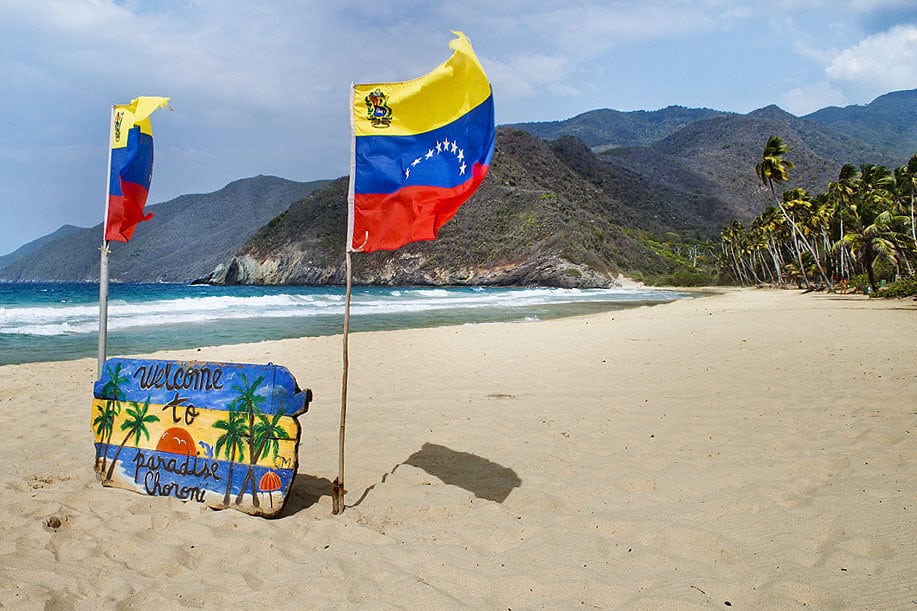
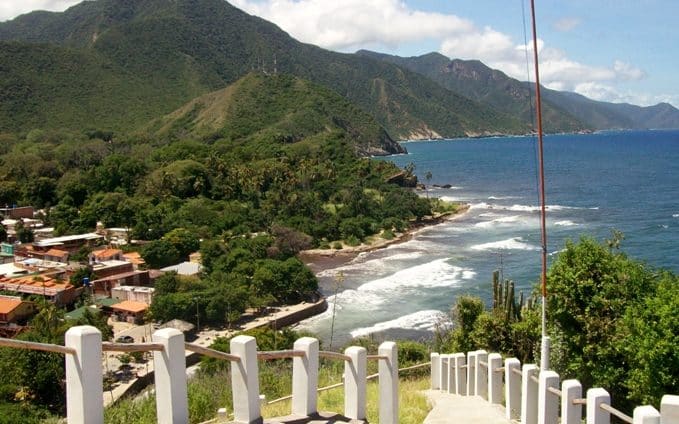
Choroní is a coastal village in Aragua state, about 70 kilometres north-west of Maracay, on the northern side of the coastal range. To get there you cross Henri Pittier National Park on a mountain road, and that road is part of the destination: you go from cloud forest to Caribbean beach in under an hour.
What you find on the other side: coloured colonial houses, cobbled streets, a beach at the foot of the forest and an entire history built on cacao.
The village
You can walk the historic centre in half an hour. Its heart is Plaza Bolívar, with the main church — 18th century — beside it, and from there run the cobbled streets with the colonial houses, the craft shops, the restaurants and the bars.
It is a small, lived-in village, not a tourist set: much of the atmosphere is put there by the community itself.
The cacao story
Choroní was founded by the Spanish in the 17th century — the name comes from an indigenous community of the area — and its economy was built on the cacao plantations established then.
In the 19th century production peaked and the village worked as an export port, which drew traders and workers of different origins and explains its cultural mix. At the end of that century and the beginning of the 20th, production fell — crop disease and changes in international markets — with the economic decline and emigration that followed.
What remained is what you see today: the architecture, the tradition, and cacao turned into cooking rather than export.
What there is to do
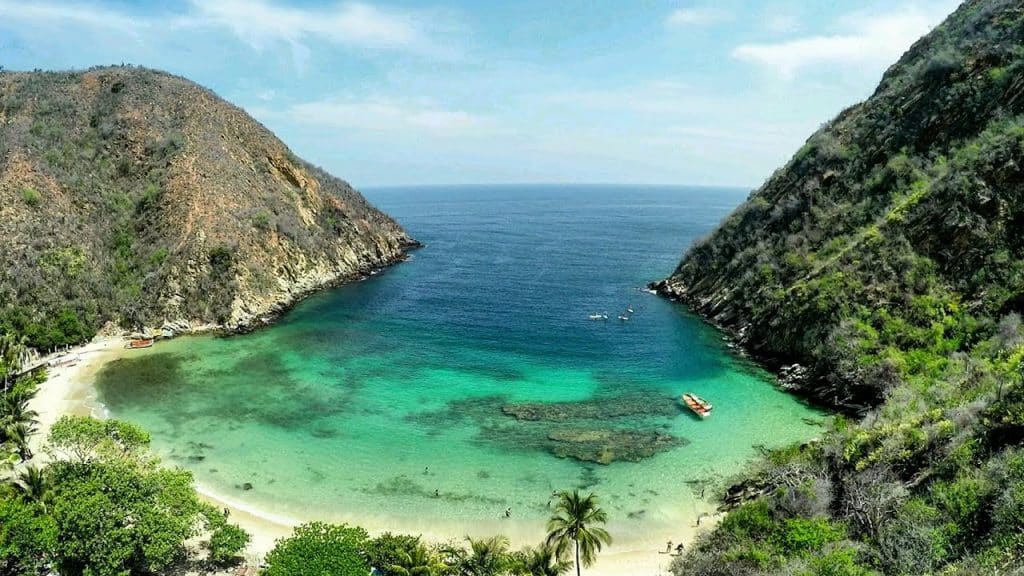
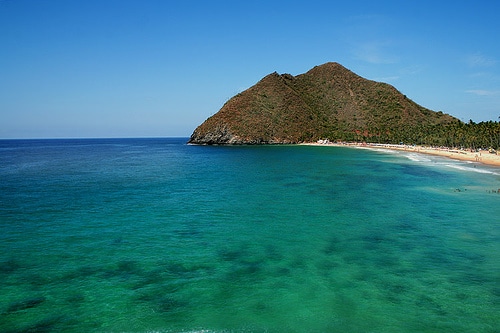
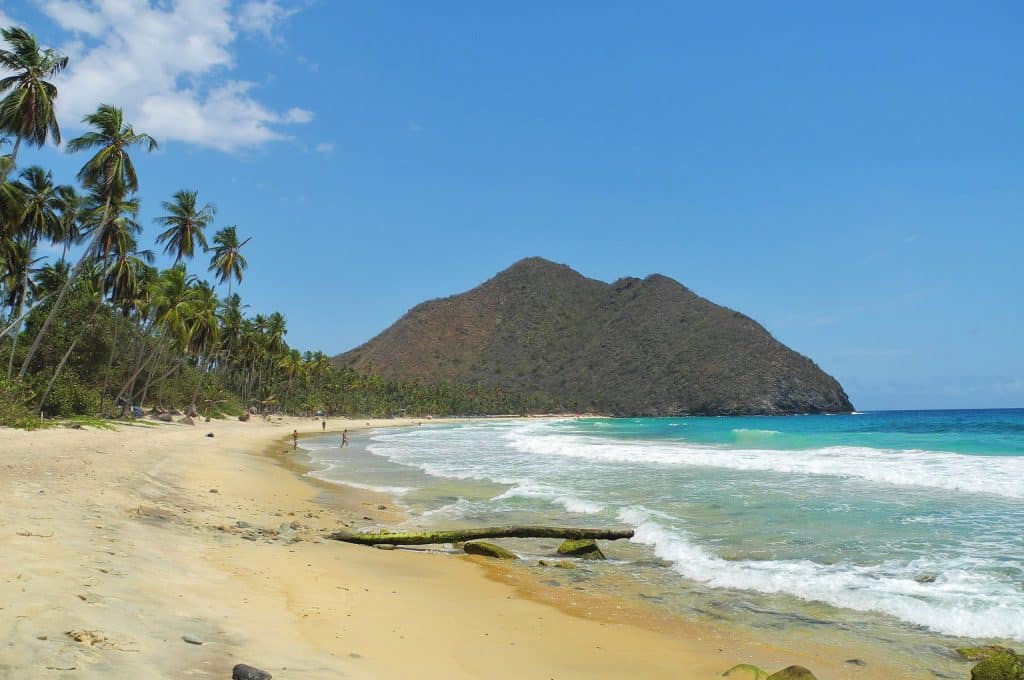
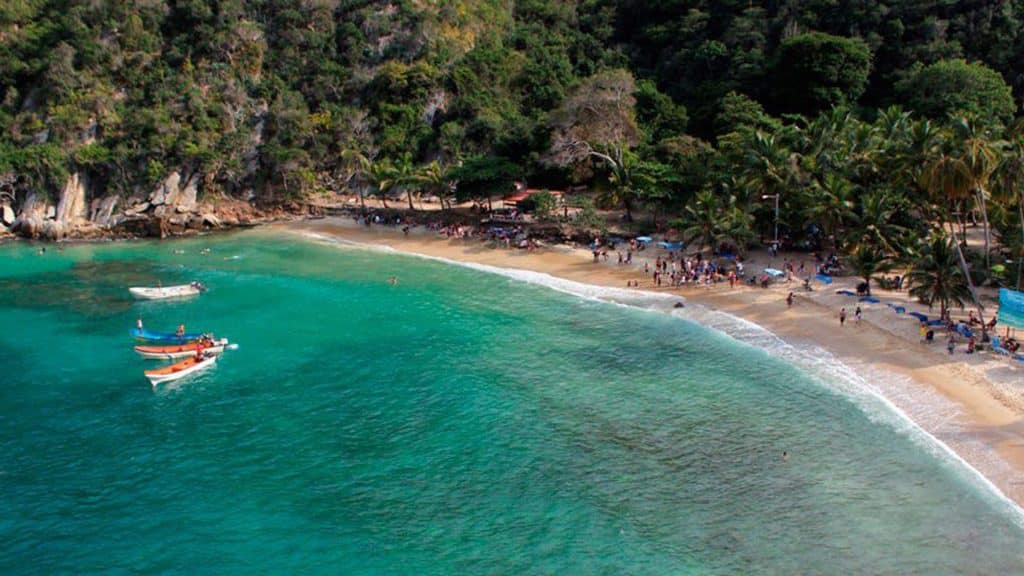
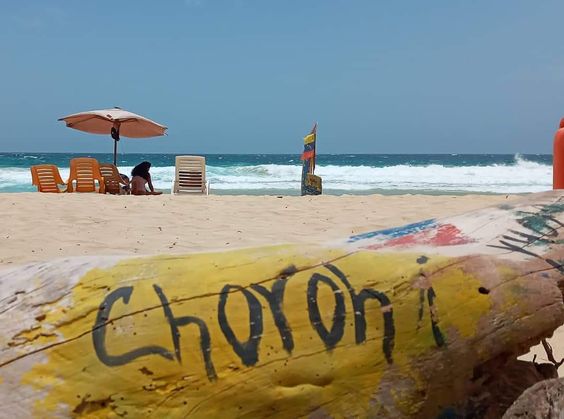
- The beach. This is the main reason: clear water, sand and mountains behind.
- Snorkelling, diving, paddleboarding and surfing, depending on the state of the sea.
- Boat trips from the jetty, to reach coves and neighbouring beaches with no land access.
- Walks on the mountain paths and to the nearby waterfalls, already inside the national park’s surroundings.
- The village: square, church, craft shops and long lunches.
When to go
Warm and humid almost all year, with temperatures between 20 and 30 °C. The dry season runs from December to April, with sunny days, and the wet season from May to November, with frequent rain.
The difference matters more than usual here, because the mountain road is narrow and rain complicates it.
What to eat
Caribbean and creole cooking, with the sea as the base: red snapper fried or grilled, octopus in sauce, prawn ceviche and lobster. Alongside it, the usual done well: arepas and empanadas filled with meat, chicken or cheese, and tropical fruit juices — pineapple, soursop, passion fruit, mango.
And the village’s own chapter: the cacao desserts, a direct inheritance from its producing past. The two names cited are the churumbele, a cacao and sugar sweet, and the besito de coco, a coconut cake covered in chocolate.
What is around it
The coastal vegetation is coconut palm, palm and mangrove, the last of these at the river mouths and central to marine life in the area.
In the water you see dolphins, sea turtles, manta rays and reef fish, and on the shore pelicans, herons and frigatebirds. Up the mountain, already in Henri Pittier territory, the wildlife changes completely: parrots, macaws, hummingbirds, capuchin monkeys, anteaters, iguanas and snakes.
That contrast between coast and cloud forest within a few kilometres is what makes this stretch of coastline what it is, and it is developed in Henri Pittier National Park.
Services
Choroní has accommodation in several ranges — guesthouses, small hotels, cabins — restaurants and cafés, craft shops and supermarkets to stock up. There is local transport within the village and taxis for the surrounding area, and operators who organise boat trips, snorkelling, diving and mountain excursions.
In other words: you can arrive with nothing booked except the accommodation, which in high season you want confirmed.
What to respect
The beach and the mangrove are the village’s asset, and keeping them clean depends on the community and the visitor in equal parts. What applies: rubbish in its place or back with you, no single-use plastic, do not touch the mangroves, and follow the instructions inside the national park, which starts literally as you leave the village.
How it fits into a trip
Choroní is the coastal break from Maracay or Caracas, and it works as a long weekend: a day on the beach, a day by boat to the neighbouring coves and a morning in the mountains. It is not a week-long destination.
If you are after other beaches on this coast, the comparison is in beaches of Venezuela; for the country as a whole, travel in Venezuela.