

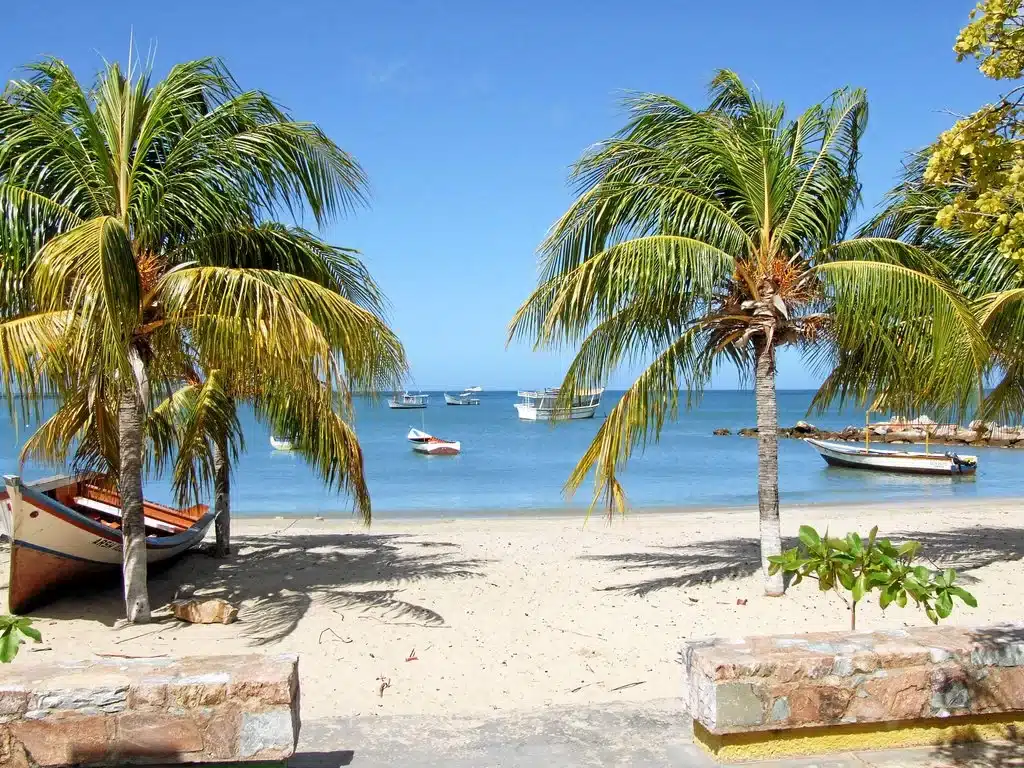
Margarita is Venezuela’s big island and the only one with complete tourist infrastructure: an international airport, a ferry, chain hotels, shops and roads. It sits off the coast of Anzoátegui and Sucre, in Nueva Esparta state, and it is known as «the Pearl of the Caribbean».
What separates it from the rest of the Venezuelan coast is that you do not have to arrange anything in advance. You arrive, you hire a car and you decide as you go. This guide covers what to know beforehand: how to get there, which beach suits which plan, what there is beyond the sand and how many days to ask for.
What the island is like
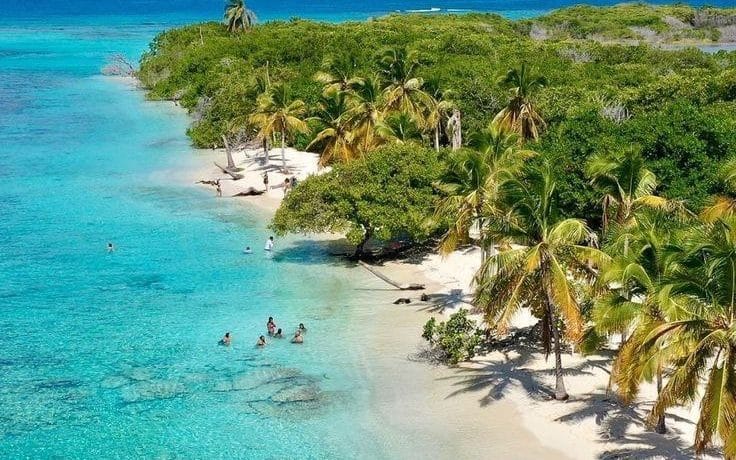
It is not a flat island. The Matasiete range rises in the middle, with hills, valleys and tropical vegetation, and to the south lies the La Restinga lagoon, a system of mangroves and channels that separates the two halves of the island. The coast alternates long white-sand beaches in the north and east with drier, more built-up areas in the south.
Two smaller islands nearby can be visited on a day trip: Coche, the windy one, and Cubagua, the one with the ruins. The whole picture is in islands of Venezuela.
Getting there
Margarita has air and sea connections to the mainland, and it is the easiest Venezuelan island to reach.
By air, to Santiago Mariño International Airport, in Porlamar. This is the fast way; taxi or hire car from the airport to your accommodation.
By ferry, from the ports of Anzoátegui and Sucre. Cheaper than flying and it lets you bring your own vehicle, in exchange for a lot more hours and a dependence on the state of the sea.
Routes, frequencies and operators change: check the current ones before fixing dates.
Once on the island, a hire car is the practical answer: the places worth seeing are spread out and public transport does not cover the northern beaches well.
The beaches, one per plan
Seven beaches cover almost every possible use. What separates them is not the water — it is the atmosphere:
- Playa El Agua — the main one. A long strip of white sand with restaurants, bars and activities. It is the one with life and the one that fills up. Full guide in Playa El Agua.
- Playa Parguito — next to El Agua but quieter and more bohemian, and the reference beach for surfing. The alternative if El Agua is too much for you.
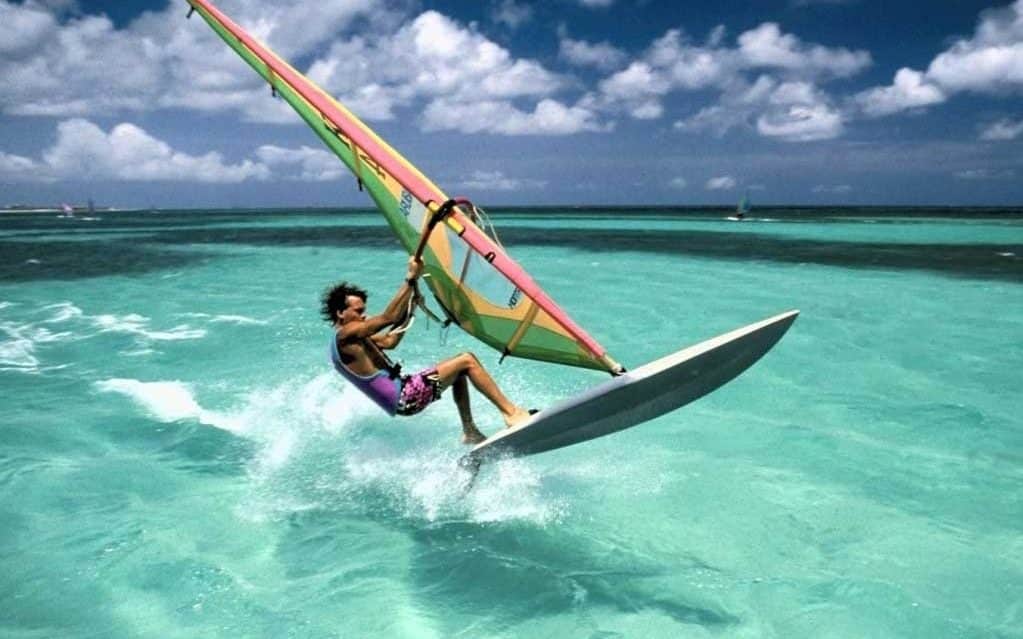
- Playa El Yaque — constant wind over shallow water: the island’s windsurf and kitesurf beach, with schools and equipment hire. Not a swimming beach. Detail in El Yaque.
- Playa Colorada — fine reddish sand and good marine life close to shore; the best on this list for snorkelling.
- Playa Caribe — calm water and an unhurried feel.
- Playa Zaragoza — soft sand and little movement; the beach for reading and doing nothing.
- Playa Pampatar — golden sand and calm water, in the town, with the castle beside it. Practical if you do not want to drive.
To compare with the rest of the country, beaches of Venezuela.
The four towns
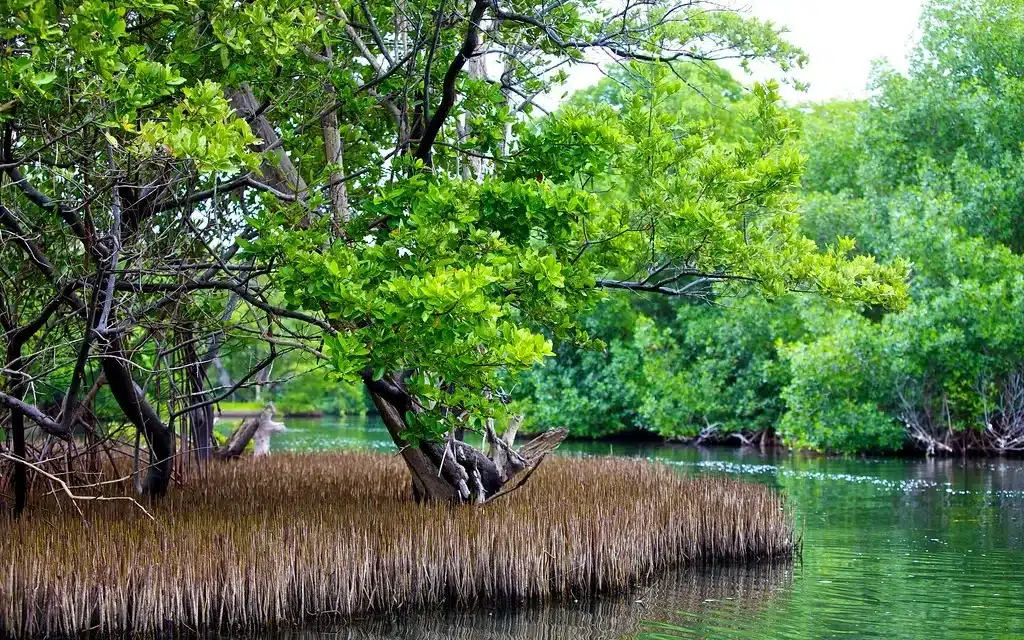
Porlamar
The big commercial town: shops, malls, restaurants and the island’s nightlife. The airport is here too. It has beaches nearby — Bella Vista, La Caracola — although they are not why people come.
Pampatar
One of the oldest towns, with a historic centre. This is where the Castillo de San Carlos de Borromeo stands, built in the 17th century to defend the island against pirate raids, and the Basilica of the Virgen del Valle. The seafront avenue holds the restaurants and shops.
La Asunción
The state capital, inland. A colonial centre, the cathedral of Nuestra Señora de La Asunción, the Santa Rosa castle and the Nueva Cádiz museum, with pieces from the first European city founded on Venezuelan soil. This is the island’s history stop.
Juan Griego
A coastal town in the north, with a harbour and the Fuerte de la Galera, which gives a panoramic view over the sea. It is the classic place to watch the sunset.
Away from the beach
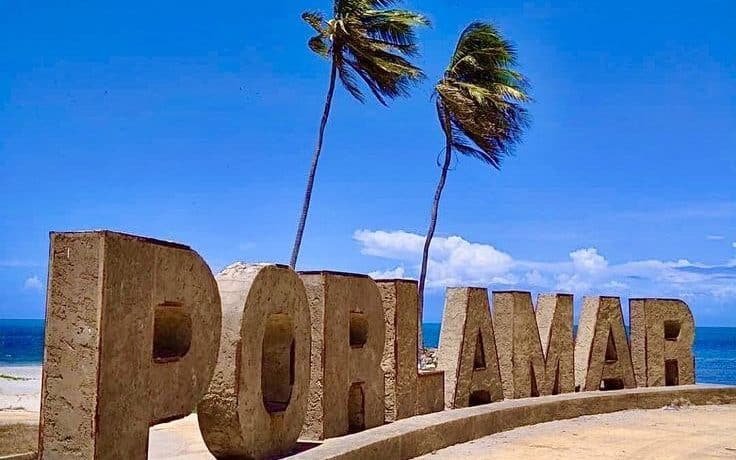
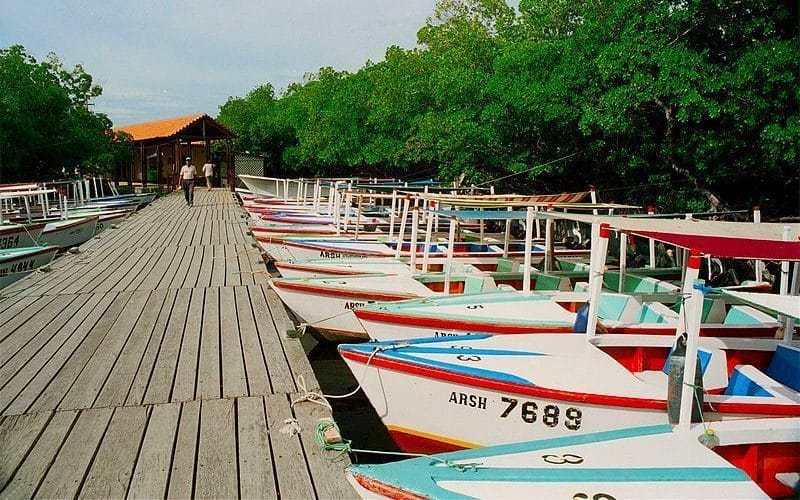
Laguna de La Restinga National Park. In the south of the island. You travel it by boat along channels through mangrove, with lagoon birds and wildlife. It is the most repeated half-day trip on Margarita and the only one that does not depend on the sun.
Cerro El Copey. The highest hill on the island, inside a national park. A walk with a panoramic view from the top. Go in the morning, before the heat.
Cerro Matasiete. Paths and viewpoints over the centre of the island, in the same range that gives the sierra its name.
The context of these protected areas is in the national parks of Venezuela.
What there is to do
On the water: windsurfing and kitesurfing at El Yaque, paddleboarding on the calm beaches, snorkelling and diving over the reefs, and sport fishing — the species cited are sailfish, marlin and dorado.
On land: walking on El Copey and Matasiete, cycling on coastal roads and rural tracks, golf, paragliding and four-wheel-drive trips into the interior.
Climate: when to go
Tropical all year, with average temperatures between 24 and 30 °C. There is no bad season in terms of cold; what changes is the rain and, above all, how full it is: Venezuelan school holidays, Holy Week and the end-of-year festivities fill the island and push prices up.
The history you can still see
Before the Europeans arrived the island was settled by indigenous communities, among them the Guaiquerí. Christopher Columbus reached its coast in 1498, on his third voyage, and in the 16th century the Spanish established a colony here that served as a trading and defensive point in the Caribbean.
That position made it a target for pirates and privateers — Francis Drake among them — which is why the castles are still standing. During the independence war it was a centre of resistance, with figures such as Luisa Cáceres de Arismendi, «the Heroine of Margarita». Tourism arrived in the 20th century and has defined the island ever since.
Wildlife and plants
The vegetation includes guayacán, sandbox tree and cardón cactus, and the mangroves of La Restinga, which act as a nursery for much of the marine life in the area. In wildlife: birds such as the troupial and the red siskin, green iguana, and the arrau turtle, a threatened species. In the water, reefs with reef fish and sponges; humpback whales and dolphins pass through in migration season.
Where to sleep
Margarita has more choice than anywhere else in the country and covers every range: seafront resorts around Playa El Agua, apartments in Parguito, city hotels in Porlamar — convenient if the trip is about shopping and nightlife — and small guesthouses spread around the towns.
The area matters more than the category: staying in the north puts you near the big beaches; in the south, near El Yaque and the airport; in Porlamar, near the shops. Pick the side of the island first and the hotel second.
Where to eat
The restaurants concentrate in Porlamar, which has the most international menus on the island, and along the El Agua seafront, where you eat looking at the sea. In the towns and at the jetties you get the usual and the best of it: the day’s fish and Margaritan cooking.
How many days, and how to split them
- Three days: El Agua or Parguito for a full day, and La Restinga on the second morning. The third, Pampatar and La Asunción.
- A week: all of the above plus El Copey, a trip to Coche, and two or three northern beaches at a slow pace.
- If the trip is about sport: base yourself at El Yaque and skip the rest.
Margarita is the usual way into the Venezuelan coast, but not the only one: to place it against the rest of the country, start with travel in Venezuela.