

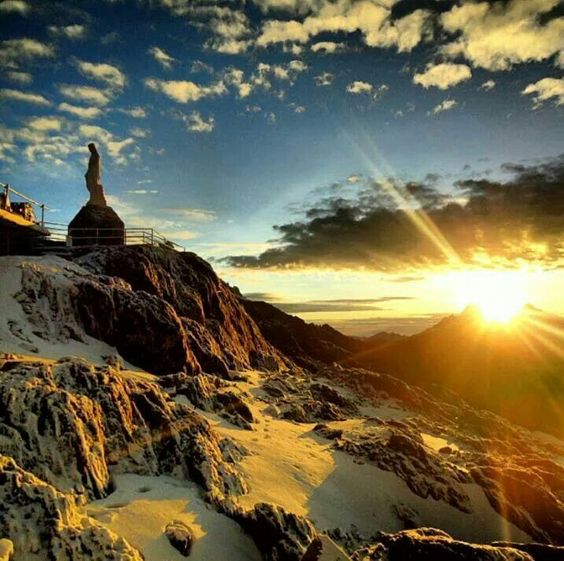
Pico Espejo stands at 4,765 metres in the Sierra Nevada de Mérida, inside Sierra Nevada National Park. It is not one of the highest summits in Venezuela — Pico Bolívar (4,978 m) and Pico Humboldt (4,940 m) are both above it — but it is the one almost everybody reaches, because the Mérida cable car ends here.
That is the whole point of the place: it is the highest ground in the country you can stand on without climbing. From the top you look across at Bolívar, Humboldt and La Concha.
What is up there
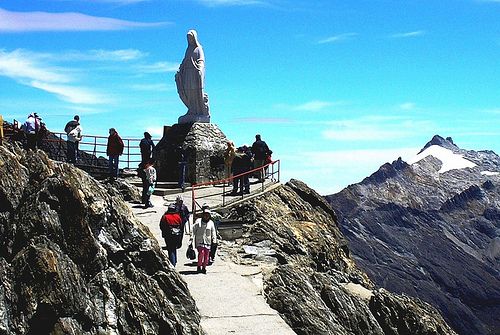
The top station, a viewing area, and rock. The landscape is high-mountain: no vegetation beyond lichen, wind, and thin air. On a clear morning the view runs across the Sierra Nevada; when cloud comes in, which is often, it closes to a few metres.
One correction worth making, because the older material on this mountain still repeats it: there are no glaciers here any more. The ice of the Sierra Nevada went from about 10 km² in 1910 to under 0.1 km² in 2018, and in 2024 the last remnant, on Humboldt, was reclassified as an ice field. Snow still falls every year. Permanent ice does not.
The Virgen de las Nieves
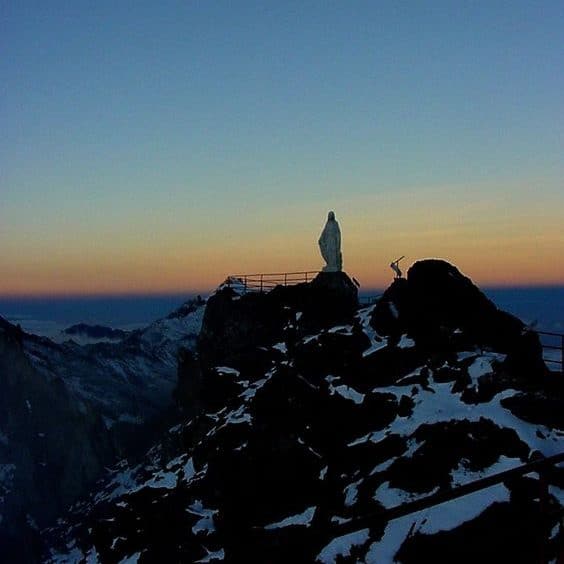
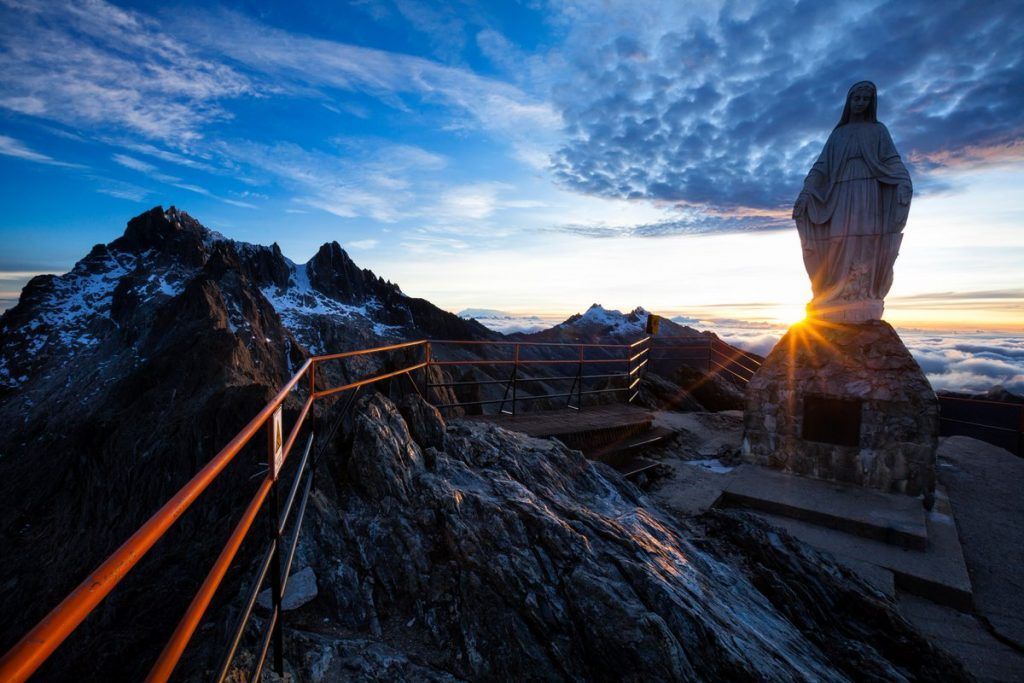
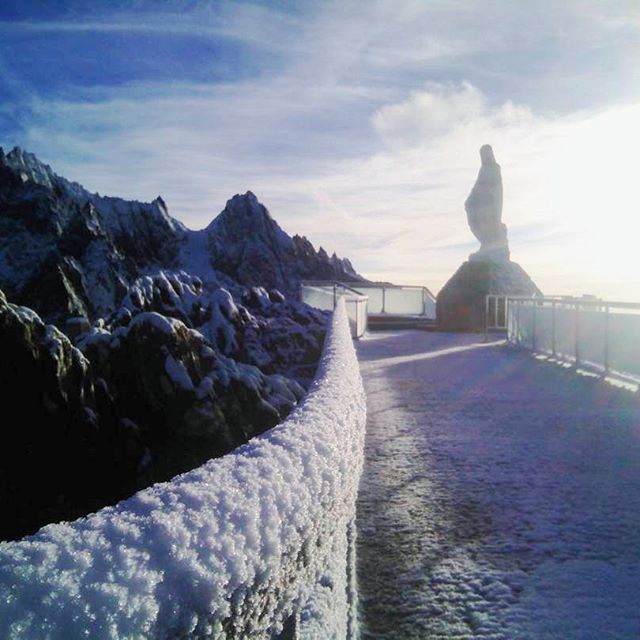
At the top there is a metal statue of the Virgin Mary — the Virgen de las Nieves, Our Lady of the Snows — with her arms open. She is regarded as the protector of people who go into these mountains, and climbers stop at the monument on the way up or on the way back.
It is also, in practice, the photograph everybody takes: the statue with the Sierra Nevada behind it.
What the altitude does to you
This is the part to take seriously. The cable car lifts you more than three thousand metres in about two hours — a gain no mountaineer would attempt in a day — and your body has no time to adapt.
At 4,765 m the air holds roughly half the oxygen it does at sea level. The common effects are headache, breathlessness, a fast pulse, nausea and loss of appetite. They have nothing to do with how fit you are: fit people get altitude sickness too, and sometimes worse, because they push on.
What actually helps:
- Spend a couple of days in Mérida first, at 1,600 m, before going up.
- Go up early. Clear weather and more time to come down if you feel bad.
- Drink water and skip alcohol the night before.
- Move slowly up there. Walking fast at 4,700 m is what turns a headache into a problem.
- Come down if it gets worse. Descent is the only thing that reliably fixes altitude sickness.
The station limits how long visitors stay at the top for this reason. It is not a formality.
The two ways up
- By cable car. The usual route and the reason the place is visited: Mukumbarí from Mérida, five stations, about two hours to the top. No walking required, and you can break the journey at any station.
- On foot, from the Laguna Verde refuge. A demanding high-mountain route on steep, rocky ground, starting from around 4,220 m. This one needs mountaineering experience, the right equipment and a guide.
Most people take the first. The second only makes sense as part of a longer trip in the sierra.
What to take
Layers, a windproof jacket, gloves and a hat: it can be below freezing at the top while Mérida is at 20 °C. And strong sun cream — UV radiation at this altitude is severe and people get burnt in twenty minutes on a cloudy day.
Getting there
The starting point is the city of Mérida, reachable by air from Caracas or by bus from most Venezuelan cities. From the centre, taxi or bus to the Barinitas station, where you buy the ticket and board.
Check the cable car is actually running before you plan the day around it: it has been out of service for maintenance for long periods more than once.
Where it fits
Pico Espejo is the accessible face of Sierra Nevada National Park. The demanding face is Pico Bolívar. And on the other side of the valley, La Culata gives you páramo at an altitude your body can handle.