

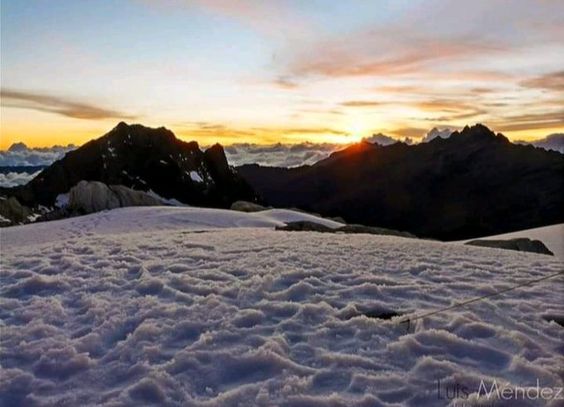
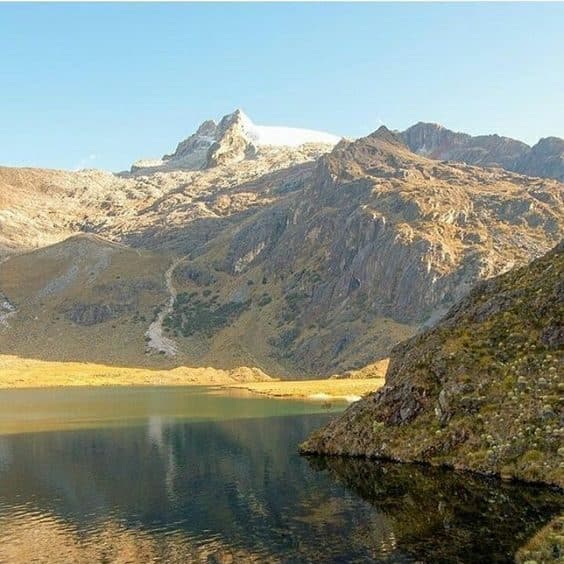
Pico Humboldt is the second highest mountain in Venezuela, 4,940 metres above sea level, in Mérida state. It stands inside the Sierra Nevada National Park, in the Andes, and it receives around 950 mm of rain a year.
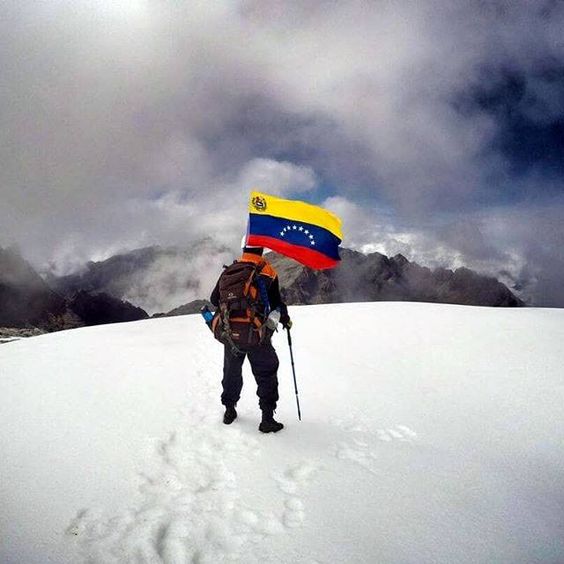
It is also the mountain that held the last ice in the country. That is no longer true in the present tense, and it changes what you should expect from the climb.
The glacier that is no longer there
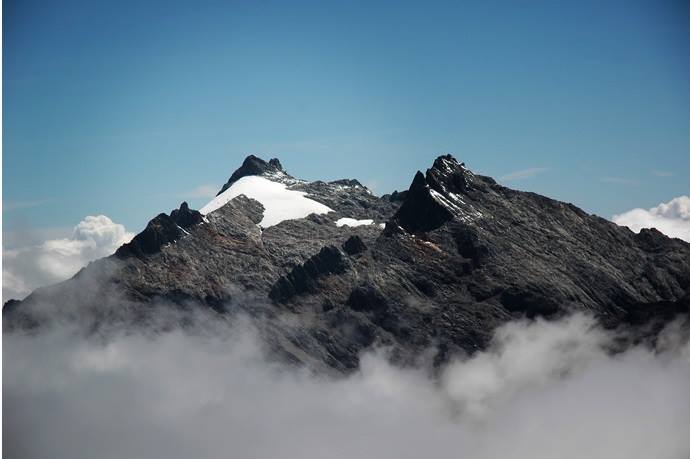
The Humboldt glacier — La Corona — sat just below the summit, above 4,900 metres. It retreated for decades, and in 2024 it was reclassified as an ice field: too small to move under its own weight, which is what makes a glacier a glacier. With that, Venezuela became the first Andean country to lose all its glaciers.
What is left is a patch of ice, and it is worth knowing before you go looking for a glacier. It is also why the mountain is still visited by researchers: the sequence is well documented and it is used as a reference case for what warming does to tropical high mountains.
Biodiversity
Sierra Nevada National Park is one of the most biologically diverse sections of the whole Andean chain, and Humboldt runs through the full altitude sequence.
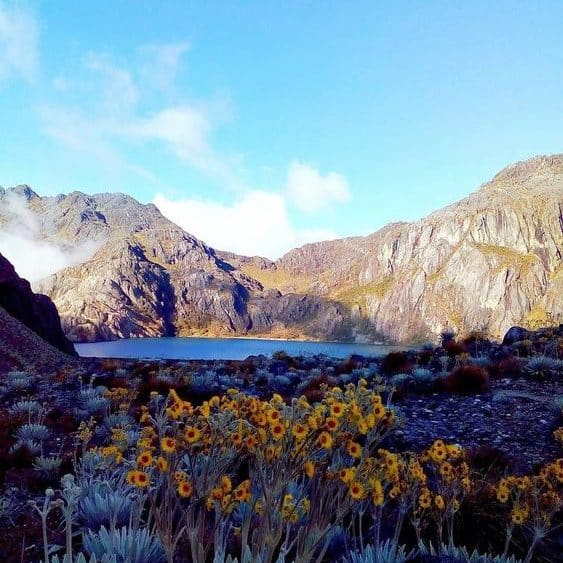
The lower slopes are cloud forest, with a large number of endemic plants and trees. As you climb, the vegetation changes with the temperature until it becomes páramo: grasses, mosses, frailejones and other plants adapted to poor soil and hard frost. These high-mountain systems are among the most valuable in the world precisely because of how many of their species exist nowhere else.
In wildlife, the emblematic species are the Andean condor, the Andean siskin, the páramo tinamou and the páramo deer, along with amphibians, reptiles and insects adapted to the altitude.
Climate
The climate depends on altitude more than on the season. In general it is very cold all year, with temperatures that can drop below zero at any time.
On the lower slopes it is milder and damp, averaging 10-15 °C, and the vegetation is dense cloud forest. Higher up, in the páramo and the high mountain, daytime averages run between 0 and 10 °C and night temperatures fall several degrees below zero. Be ready for snow, strong wind and frost up there.
What the climb demands
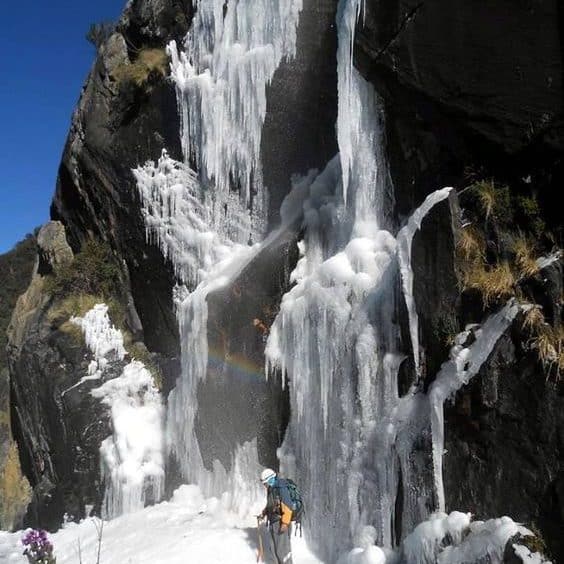
Humboldt is a demanding ascent and it is not a hiking objective. The rocky ground, the remaining ice and the wind make it technical, and the altitude adds the rest: less oxygen and a real risk of altitude sickness.
In practice it asks for good physical condition, rock and ice skills, specialist equipment and careful planning. Guides who know the mountain are not optional, and the weather has to be part of the decision on the day, not a detail checked beforehand.
Getting there and the route
Everything is organised from Mérida: guide, equipment and transport. From the city you head for the Sierra Nevada National Park — bus or taxi towards Mucuchíes — and on to the Refugio La Coromoto, which is the start of the ascent.
The climb takes several days, in stages, with camps along the way. The pace is set by acclimatisation rather than by fitness: going up fast is what causes the problems.
Before you book
- Train for it. The ascent is hard and it needs a base of endurance built beforehand, not improvised.
- Get current information. Conditions, available routes and requirements change. Local guides are the reliable source.
- Take the right kit. Waterproof and warm clothing in layers, solid boots, harness, crampons and ice axe, and a pack with enough food and water.
- Respect the park. No rubbish, no damage to plants or wildlife, no fires outside permitted areas.
- Safety first. Watch the weather, follow the guides, and be willing to turn round. The summit is optional; getting down is not.
- Permits. Some areas have access restrictions and limited numbers. Sort it before you travel.
Where to stay and eat
Mérida is the base before and after: everything from basic refuges to small hotels, and restaurants with local cooking. The full list of where to sleep and eat is in the Mérida guide, which is also where the guides and the equipment hire are.
Where it fits
Humboldt shares its massif with Pico Bolívar, the highest summit in the country, inside the Venezuelan Andes. If the altitude interests you but the technical climbing does not, the La Culata páramo gives the same landscape without the rope.