

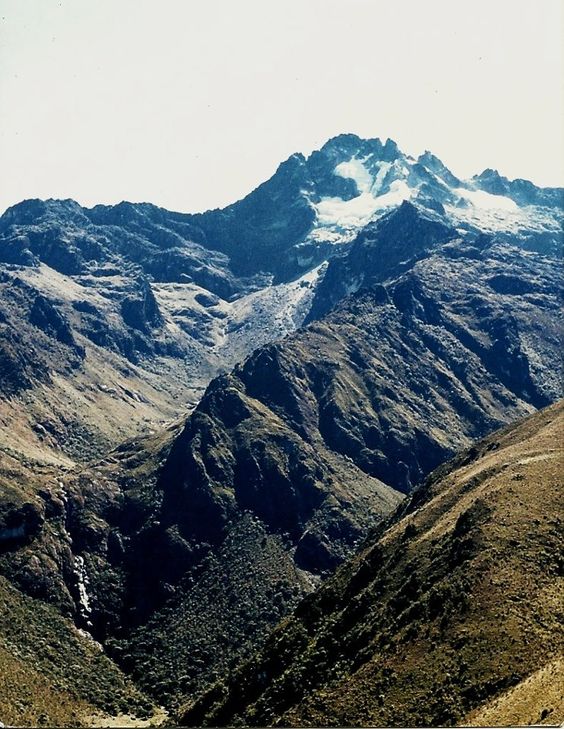
Pico Bolívar is the summit of Venezuela: 4,978 metres above sea level, in the Sierra Nevada National Park, Mérida state. It carries the name of Simón Bolívar and it is both a national symbol and a serious mountaineering objective — not a viewpoint you walk up to.
What kind of mountain it is
It is made of metamorphic and volcanic rock, and it crosses several ecological belts in very little vertical distance: tropical forest at the base, frailejón páramo higher up, and bare wind-scoured rock at the top.
Its glaciers have shrunk drastically. The ice surface of the sierra went from around 10 km² at the start of the 20th century to less than 0.1 km² in 2018: the Pico Bolívar of the old photographs, with a permanent white cap, no longer exists.
What to understand before considering the climb
- This is high mountain. Above 4,500 m acclimatisation stops being optional and altitude sickness is a real risk.
- It needs technique. The final section is not hiking: it involves rock and specific equipment.
- You go with a guide. The ascent is organised from Mérida with local mountain guides.
- The weather turns fast. Conditions on the summit can be completely different from those in the valley at the same hour.
Seeing it without climbing it
Most people who travel to Mérida do not climb Bolívar: they look at it. The Mérida cable car goes up to Pico Espejo, above 4,700 m, and from there you have the summit in front of you without climbing anything. It is the usual way to see the Venezuelan high Andes.
The Andean context
Bolívar shares its massif with Pico Humboldt, the second summit in the country, inside the Venezuelan Andes. North of the city, the La Culata páramo gives you the frailejón landscape with no technical demand. The overview of the country’s three mountain systems is in mountains of Venezuela.