

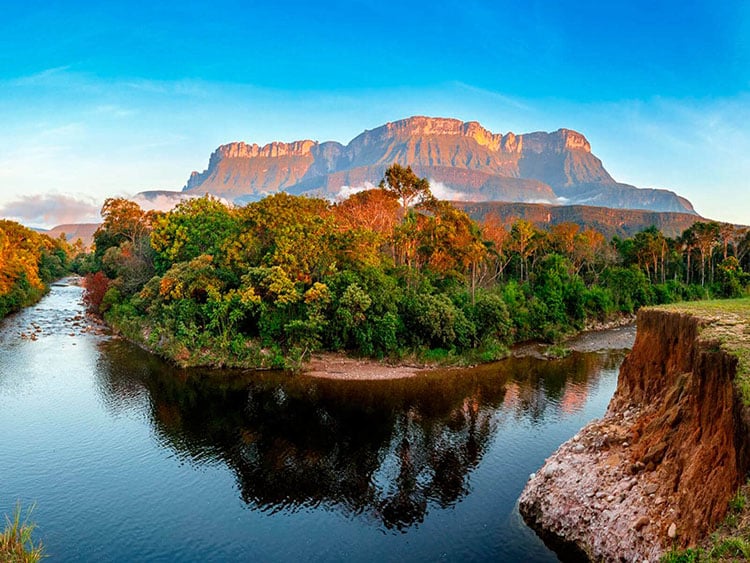
La Gran Sabana is the southern sector of Canaima National Park: an open plateau in the south-east of Bolívar state, between the borders with Brazil and Guyana, where the plain is interrupted every few kilometres by a tepui — a sandstone table with vertical walls and a flat top.
It is the part of Canaima you cover by road, and that separates it from the rest of the park: here you do not depend on a light aircraft or a boat. You drive, you stop at the waterfalls and you sleep in the next village.
What a tepui is and why it matters
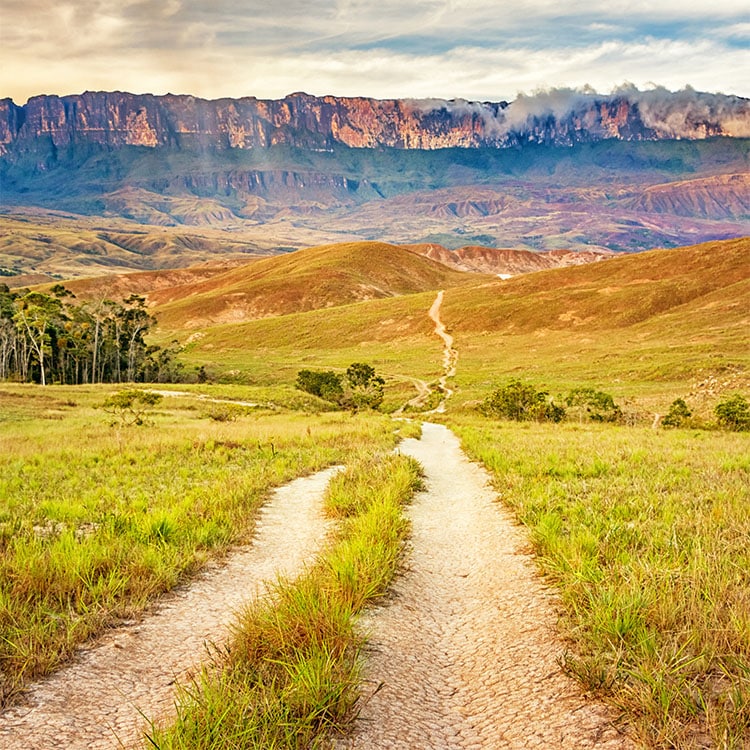
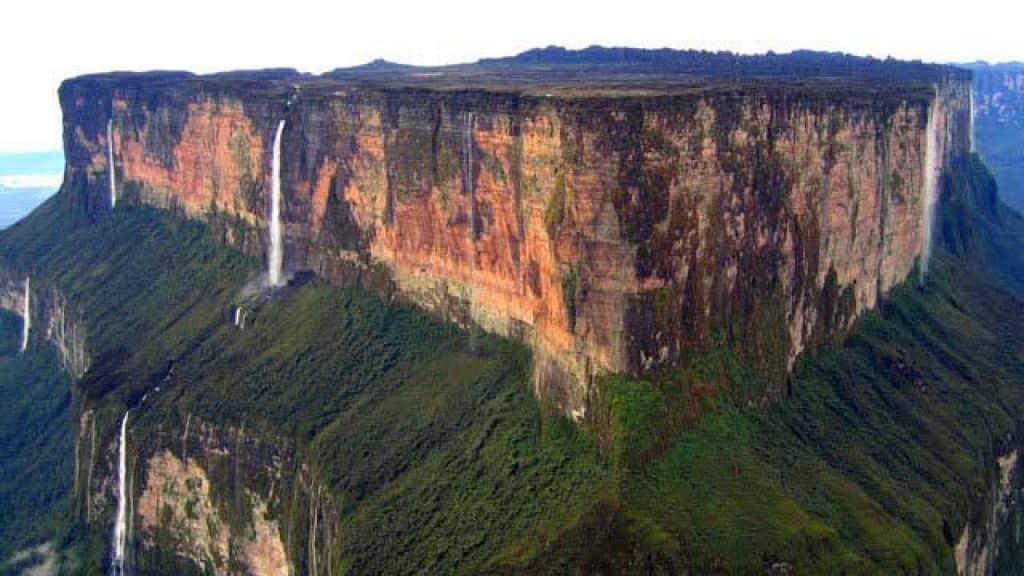
Tepuis are sandstone formations of very old geological origin: their summits have been isolated from the ground around them for millions of years, which has produced plant communities that exist nowhere else. They work as biological islands in the middle of the savannah.
That isolation is what gave Arthur Conan Doyle the idea for The Lost World, the novel that imagined prehistoric life surviving on top of these tables.
The tepuis and waterfalls of the region
- Roraima. The best known and the one you climb on foot, on a crossing of several days. A flat summit ringed by vertical cliffs and a landscape of eroded rock that resembles nothing else. In Roraima.
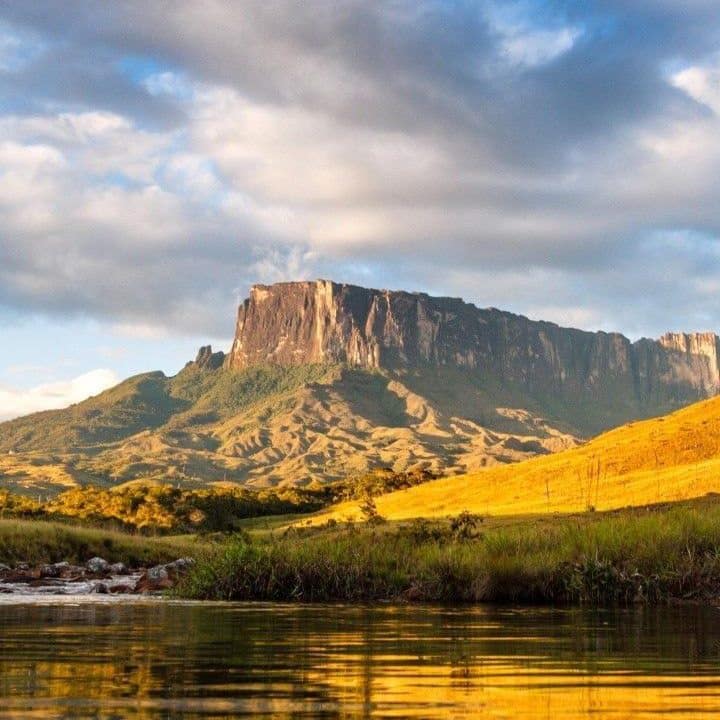
- Kukenán. Roraima’s neighbour, visible from the same route. A narrower silhouette and an unmistakable profile.
- Auyantepui. The largest of them all, and Angel Falls comes off its wall — the highest waterfall in the world at 979 metres. It belongs to the northern sector of the park and is visited from the Canaima lagoon, not from the road.
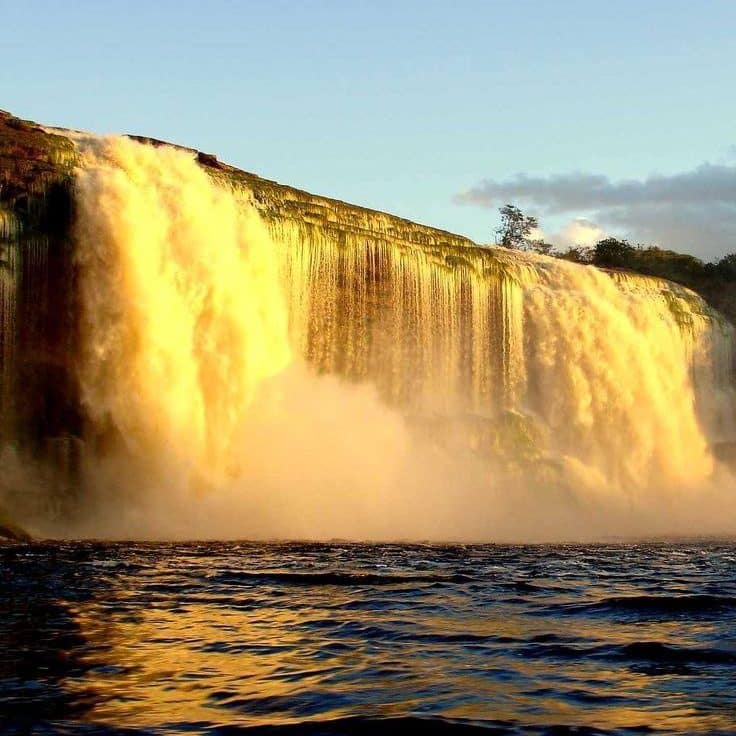
- The savannah waterfalls. The landscape is crossed by dark-water rivers that form falls you can reach on foot from the road. This is the plan that defines a day here: drive, stop, walk down to the falls, swim, carry on.
- Pozo Jacuzzi. A pool with a current where the water comes in as a whirl, a classic stop for getting in. The name misleads: this is river water, not thermal.
The Pemón
La Gran Sabana is Pemón territory, and not as a historical footnote: the communities are still there and they are the people who guide, transport and house most visitors. Access to the waterfalls, to the paths and to the Roraima climb goes through them.
Their knowledge of the ground is the reason this destination can be visited at all. Visiting the communities is part of the usual route: their own culture, cooking and craft.
What there is to do
- Walks to the waterfalls. Short walks from the road to falls and pools you can swim in.
- Multi-day crossings, principally the climb up Roraima.
- Camping. Sleeping out on the savannah, under a clear sky with no light pollution, is part of the attraction.
- Wildlife watching, with patience and a guide.
- Landscape photography. The light at dawn and dusk on the tepuis is why a lot of people come.
- Visits to Pemón communities.
What lives here
The region mixes open savannah, gallery forest, rainforest and marsh, and each supports different species. Among the mammals cited are the jaguar, the puma, the ocelot and the tapir. In birds, the oilbird, the helmeted curassow and the harpy eagle, one of the largest raptors in the world.
There are also anaconda, tortoise and caiman, and in the plant life a notable abundance of orchids, bromeliads and ferns, many of them adapted to the poor, rocky soils of the summits.
How to get there
By air. From Caracas to Manuel Carlos Piar International Airport, in Ciudad Guayana, and from there short flights to the Canaima airstrip, which gives access to the lagoon sector and Angel Falls.
Overland. Bus or your own vehicle to Ciudad Bolívar, and from there hired transport or a rental car heading south. This is the right way in if the objective is the savannah rather than the lagoon: the road is the route.
With an operator. The majority option. A specialist agency sorts transfers, permits, guide and accommodation, which in a region without dense tourist infrastructure is not a luxury but the difference between making the trip and not making it.
Where to sleep
What there is amounts to guesthouses and camps, not hotels: small places spread along the settlements on the road and in the lagoon sector. Many work on a closed package including meals and excursions.
You eat where you sleep. Outside the guesthouses and camps there are barely any restaurants, and the ones there are serve the cooking of the region. If you travel independently, come with confirmed bookings: the distances between settlements are long and there is little alternative.
How to look after it
The whole region is inside a national park and inside indigenous territory at the same time. That means there are accesses that need a guide or a permit, areas where you cannot camp and waterfalls you do not visit independently. Asking beforehand is faster than sorting it out afterwards.
The basic rules: your rubbish leaves with you, no fires outside the designated areas, no picking plants — many are endemic to a single summit — and respect the instructions of the community that manages each point.
How it fits into a trip
La Gran Sabana and the Canaima lagoon are two different trips inside the same park: one is done by road and the other by light aircraft and boat. Combining them takes time and money; picking one is the normal thing to do.
The full comparison is in Canaima National Park, and the protection context in the national parks of Venezuela. To place the region in the country, travel in Venezuela.