

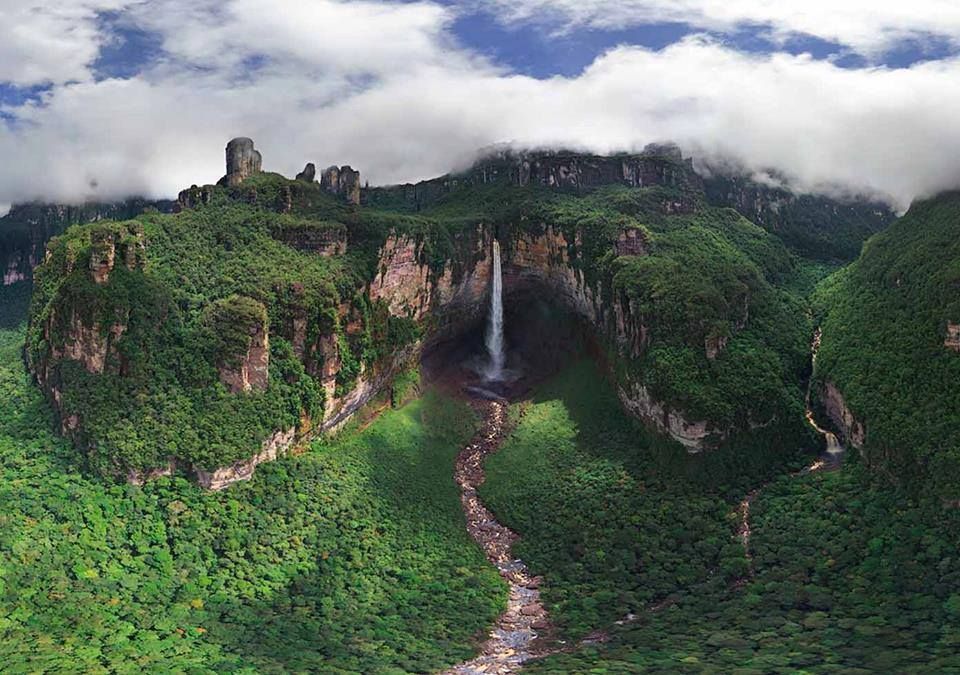
Canaima is not a park you see in a day: it is 30,000 square kilometres in Bolívar state, one of the largest national parks in the world, with the highest waterfall on the planet inside it. It is bounded to the north by the Caroní river and to the south by the Brazilian border, and it takes in both La Gran Sabana and the tepuis that define it.
That forces a choice. Nobody sees all of Canaima: you pick a sector — the lagoon and Angel Falls, or La Gran Sabana, or the climb up Roraima — and build the trip around it. This guide is here to help you decide which.
What is inside
Angel Falls
The highest waterfall in the world: 979 metres off the wall of the Auyantepui. The Pemón call it Kerepakupai Merú. You get there by air, on an overflight, or by boat upriver from the Canaima lagoon, which means a night out. All the detail — including which season to go in, which changes the trip completely — is in the Angel Falls guide.
Canaima lagoon
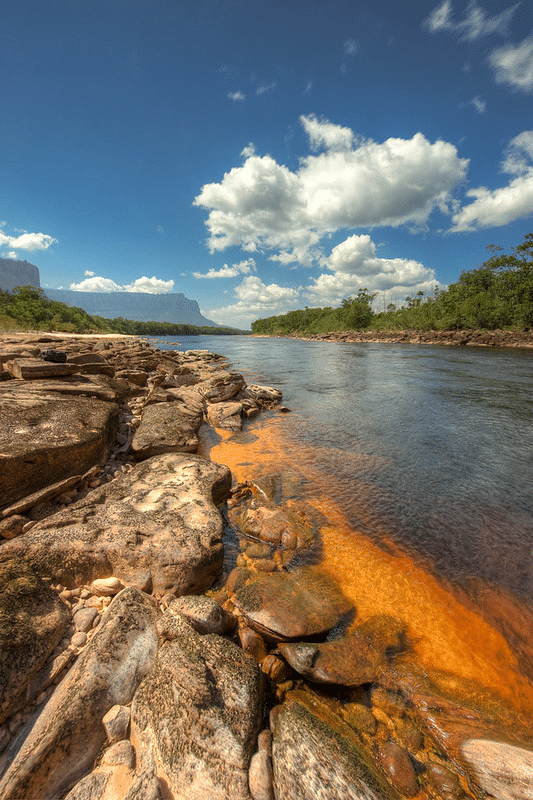
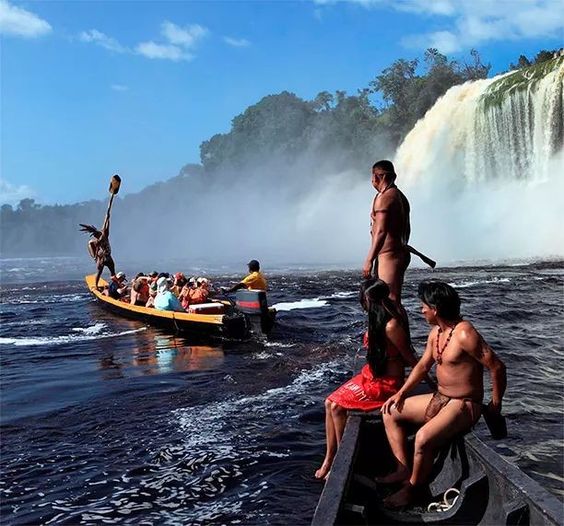
The de facto base camp. A lagoon surrounded by forest where the accommodation is concentrated and from which the boats leave for the rest of the sector. You can go out on the water, swim, and do nothing, which is more than it sounds when the rest of the trip is logistics.
Salto El Sapo
A substantial waterfall with one particularity: you cross behind the curtain of water. From the far bank you can see three tepuis characteristic of the area: Zamuro, Venado and Cerbatana.
Roraima
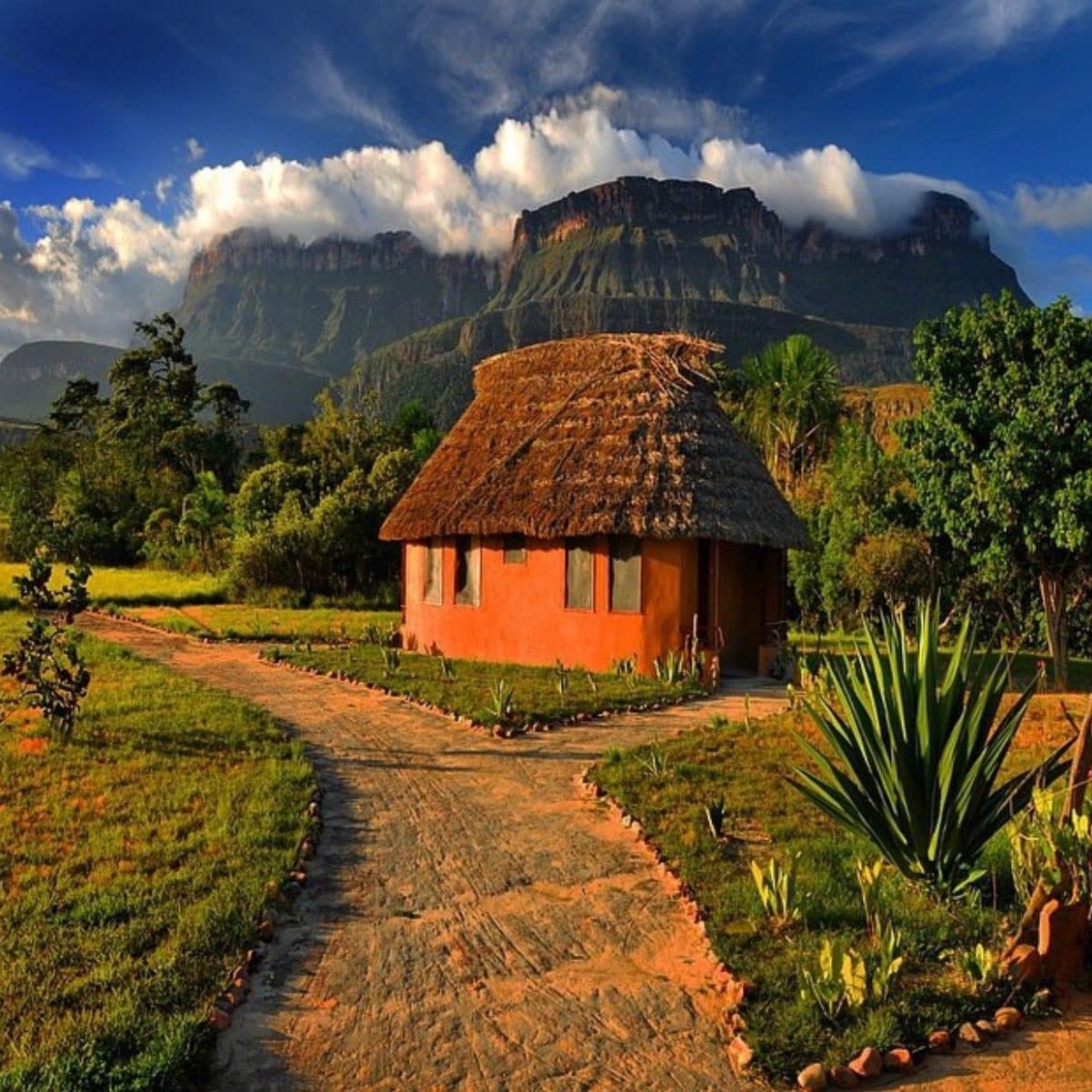
The most emblematic tepui in the region and the one you climb on foot, on a crossing of several days. On top, a flat summit of eroded rock that resembles nothing else. This is not a day out: it is serious walking. In Roraima.
La Gran Sabana and the Devil’s Canyon
The region of plateaus, savannah and waterfalls that occupies the south of the park, drivable in a four-wheel drive along the road that runs down towards Brazil. Inside it is the Cañón del Diablo, with walks and caves. It is the sector that works best independently. In La Gran Sabana.
Kavac
A camp and Pemón village near the Auyantepui, the starting point for walks in the area and one of the stops where you meet Pemón culture, cooking and craft at first hand.
Getting there
By air. This is the usual way. Flights from Caracas or Ciudad Bolívar to the Canaima airstrip, beside the lagoon. The flight itself passes over forest, rivers and tepuis, so it counts as part of the visit.
Overland. From Ciudad Bolívar by four-wheel drive towards La Gran Sabana, stopping at viewpoints on the way. This is the option if you want the southern sector of the park; it does not replace the flight if the objective is Angel Falls.
Inside the park. There are no roads in the lagoon sector: you move by boat along the rivers, or on foot. Anything else is flown.
Where to sleep
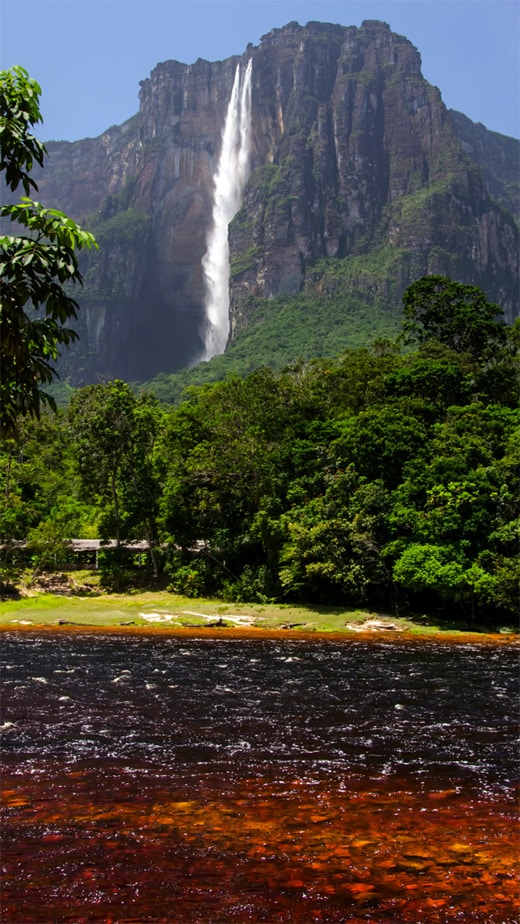
In Canaima the accommodation is concentrated in camps and lodges tied to the park’s tourism operation, most on the shore of the lagoon and some towards the Auyantepui. They are small places with limited capacity.
Almost all work on full board, and not for comfort: outside the camps there is nowhere to eat. When you book, get in writing what the package includes — meals, boat transfers, overflight, guide and fees — because that is where the conditions vary most.
What lives here
The wildlife cited in the park includes jaguar, puma, giant anteater and brocket deer, plus howler and capuchin monkeys. Among the birds, the oilbird, the harpy eagle, the toucan and the helmeted curassow. In the rivers and lagoons, tapir and pink river dolphin.
In plants, tropical forest with moriche palm, camurí and apamate, and a notable abundance of orchids and bromeliads, many of them associated with the tepui summits, which work as isolated biological islands.
History and protection
The region has been inhabited since long before it had a name on a map: the Pemón are the majority people and their knowledge of the territory is still the basis of almost all guided activity in the park.
Venezuela declared the area a national park in 1962, and in 1994 UNESCO inscribed it as a World Heritage site, for the geological value of the tepuis as much as for the landscape. Protection has not removed the pressures: deforestation and poaching are still the problems cited.
How to choose your trip
- To see Angel Falls: fly to Canaima, base at the lagoon, overflight or boat. Three or four days.
- Landscape and driving: La Gran Sabana overland from Ciudad Bolívar. A long week, better with a high vehicle.
- Mountain: the Roraima crossing with a guide. Several days of walking and your own kit.
- First time and short on time: Canaima lagoon and Salto El Sapo, which fit into two days.
Canaima is the largest piece of the system of national parks of Venezuela. To place it inside the country, travel in Venezuela.