

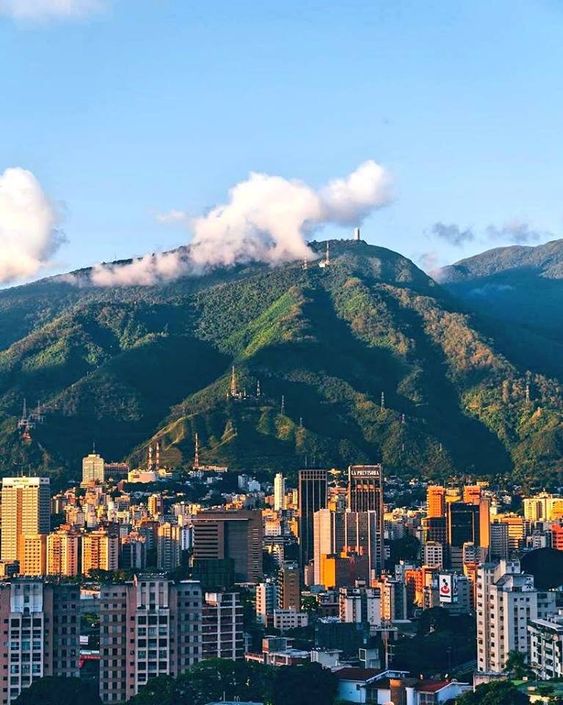
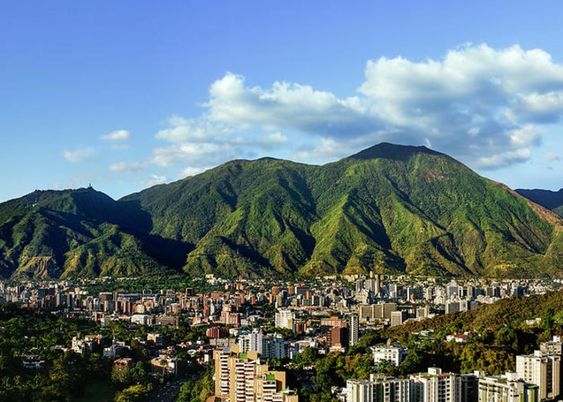
El Ávila is the mountain Caracas looks at all day. It has been a national park since 1958, covers some 81,000 hectares and rises between the city and the sea, with Pico Naiguatá at 2,765 metres as its high point.
What makes it unusual is not the landscape, although that too: it is the distance. You walk in from neighbourhoods of Caracas, you go up by cable car in minutes, and you are in cloud forest by mid-morning. No other Latin American capital has anything like this attached to the built-up area.
What the mountain is like
The park changes completely with height. Low down, on the slopes facing the city, there is dense tropical forest. Higher up, cloud forest: trees covered in moss, orchids and permanent damp. And in the inner valleys, rivers and waterfalls that are the most repeated half-day objective.
The viewpoints face two different ways: south over the whole of Caracas, north over the coast and, on clear days, the Caribbean.
Beyond its recreational value, the massif does a job the city notices: it is a fresh water source for Caracas and its metropolitan area.
Where you go in
There are several ways in and they do not lead to the same place. Choosing the right entrance is half the day out:
- Sabas Nieves, off the Ávila road. The most used walking access: it climbs hard from the first metre and it is the training path for half of Caracas.
- Maripérez, off the Los Venados road. It leads to that sector and to the lower cable car station.
- The Galipán road, which goes to the village of Galipán, on the northern side: flowers, guesthouses and restaurants with a view.
- The Caracas cable car, which climbs from the city to the top in a short ride and drops you straight into the area of viewpoints, paths and recreation grounds. This is the way in for anyone who does not want to walk up.
The entry points usually have parking and connect directly to the path network.
What you do up there
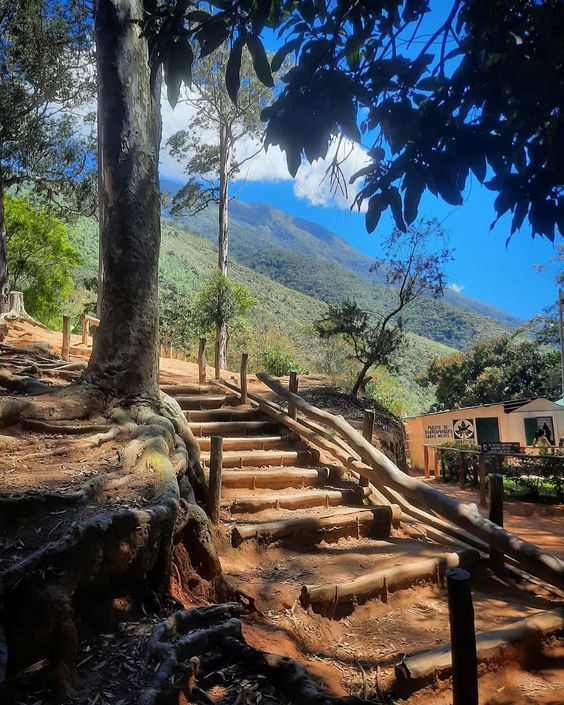
- Hiking, from short walks to full-day routes through cloud forest, with waterfalls and streams on the way.
- Viewpoints. The most accessible plan, and the one that justifies the cable car.
- Mountaineering. Naiguatá is the serious objective: high, a long day, and technical ground in the final section. It is not a Sunday walk.
- Climbing on the established routes.
- Picnics and outdoor sport, which is what most people from Caracas do here on any given weekend.
What lives here
In plants, the list includes the araguaney — Venezuela’s national tree — the flor de mayo orchid, and, at the higher levels, frailejones.
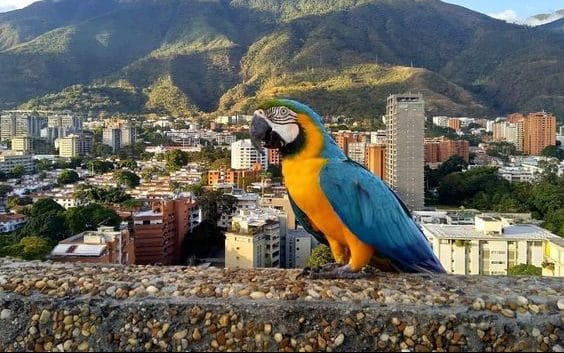
In wildlife, birds such as the blue-bellied hummingbird, the troupial and the chachalaca, and mammals including puma, brocket deer, armadillo and several species of monkey. The streams hold amphibians — among them harlequin frogs, a particularly threatened group — and reptiles, rattlesnake included.
History
The mountain was inhabited before the colonial period and was explored by the Spanish during it. In the 19th century it took on strategic weight because of its position over Caracas: during the war of independence it served as a refuge and as a defensive point for the city.
The declaration as a national park in 1958 is the turning point: from there the massif goes from ground you cross to a protected area, and becomes a reference point for ecological research in the country.
Where to sleep
Sleeping on the mountain is possible and it is a different experience from the city. What there is splits between the summit, with the massif’s historic hotel and its views over Caracas and the coast, and Galipán, on the northern side, where there are small guesthouses among the nurseries and restaurants.
Capacity is very limited and the weekend is the only high-demand window: book ahead.
Where to eat
Galipán is the restaurant area of the park, and nearly all of them sell the same thing alongside the food: the view over Caracas or over the sea. There is everything from grilled meat and Venezuelan cooking to European and informal menus.
It is a weekend area: midweek many places cut their hours or close, so check before you go up.
What has to be respected
This is a national park under daily urban pressure, and that produces two concrete problems: illegal logging and poaching, which are what the rangers are trying to contain.
For the visitor the rules are simple: your rubbish comes down with you, no fires, do not leave the marked paths — erosion on these slopes is fast and hard to reverse — and do not pick plants.
How it fits into a trip
El Ávila solves a day in Caracas without leaving the city, and it works equally well as a half-morning by cable car or as a full mountain day. If you are going up Naiguatá, count on a whole day and check the state of the route first.
The context of the protected areas is in the national parks of Venezuela; for the rest of the Venezuelan mountains, Pico Bolívar and Roraima. And to place Caracas inside the country, travel in Venezuela.